A Living Strategy: Science, Community, and Culture in Action for Guatemala’s Waterbirds and Shorebirds
In Guatemala, a toolkit created to strengthen best practices on shrimp farms has expanded beyond the production sector and is now also training the next generation of environmental professionals.
MSP+ Science to Action- 2025-2026
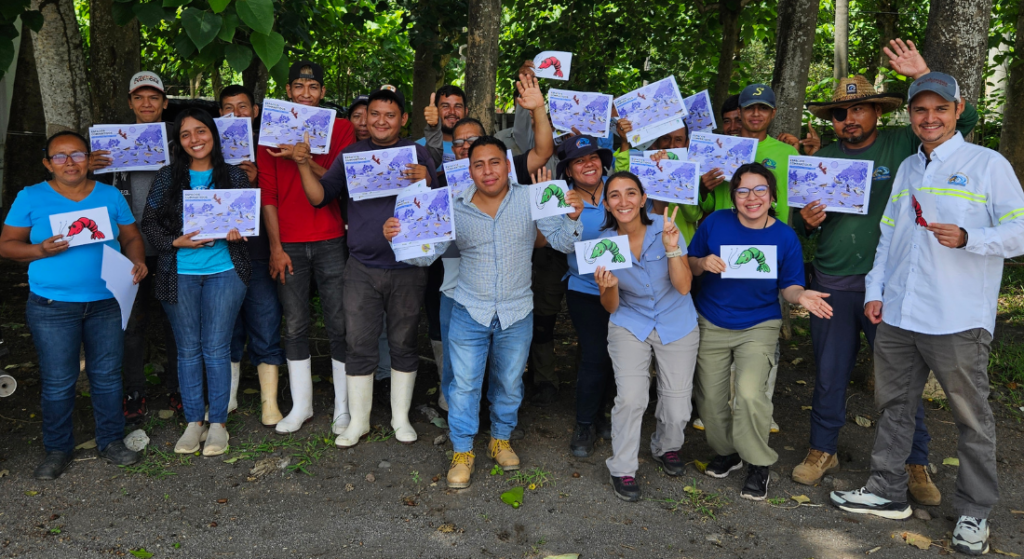
Training of shrimp farmers and workers. Credits Defensores de la Naturaleza.
Science can become action when it is translated into practical, multisensory tools that encourage people to observe, listen, discuss, record, and learn through direct field experience. With this vision, Fundación Defensores de la Naturaleza developed a toolkit to train shrimp farm personnel in best practices that support both productivity and the conservation of waterbirds and shorebirds. What was initially conceived for the production sector has opened new opportunities for collaboration with academia, where these educational materials also build skills and help shape a future National Strategy for the Conservation of the 171 waterbird species recorded in Guatemala.
MSP+ Makes a Difference by Transforming Science into Learning Tools
The MSP+ Program played a key role in transforming the toolkit into a platform for learning, collaboration, and shifting perceptions. Fundación Defensores de la Naturaleza designed this toolkit to help shrimp farm personnel adopt best practices that benefit both productivity and the conservation of waterbirds and shorebirds.
The toolkit brings together videos, lessons, interactive quizzes, field identification and data-recording guides, infographics, best practice materials, and field data sheets. Designed with an andragogical approach, it promotes hands-on learning for adults and makes it easier to apply the knowledge in day-to-day work.
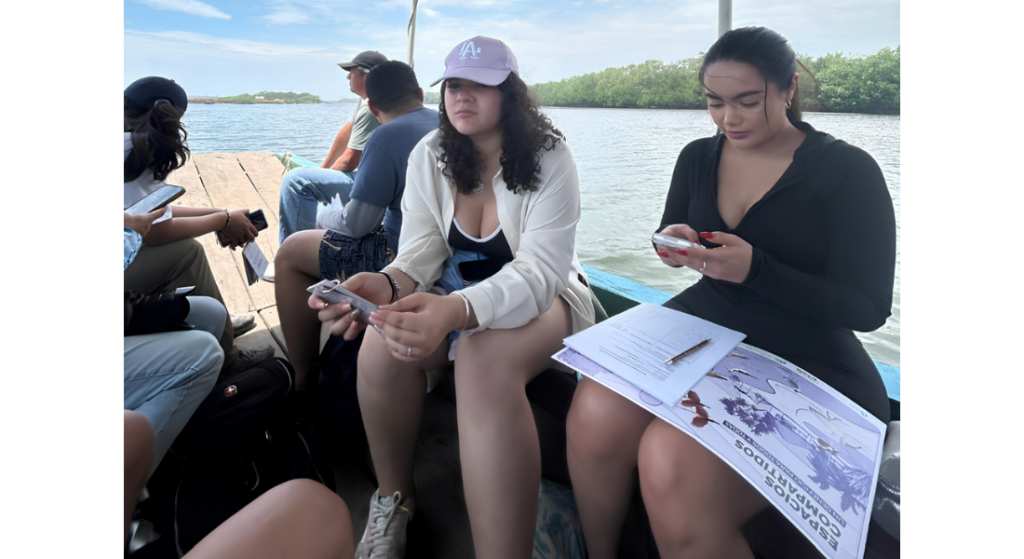
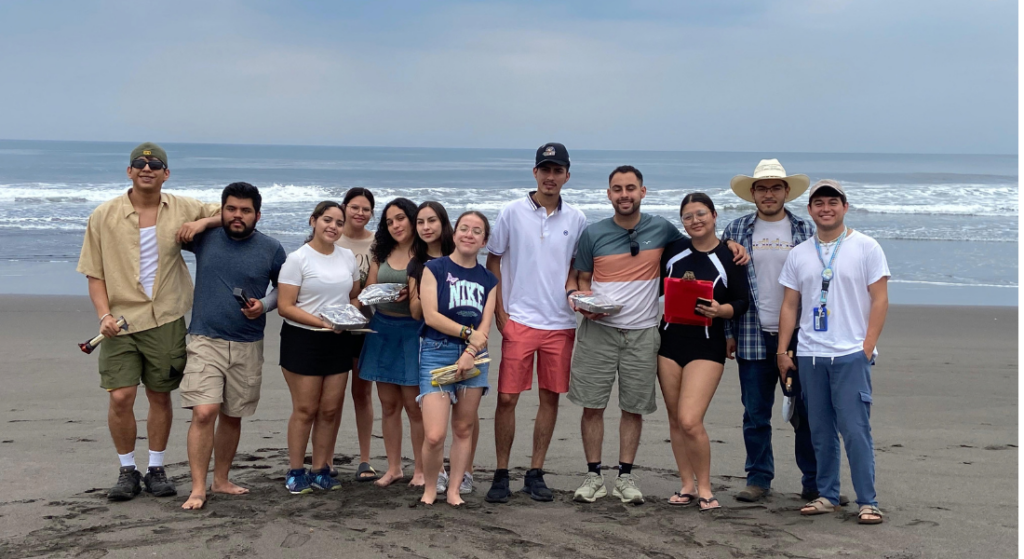
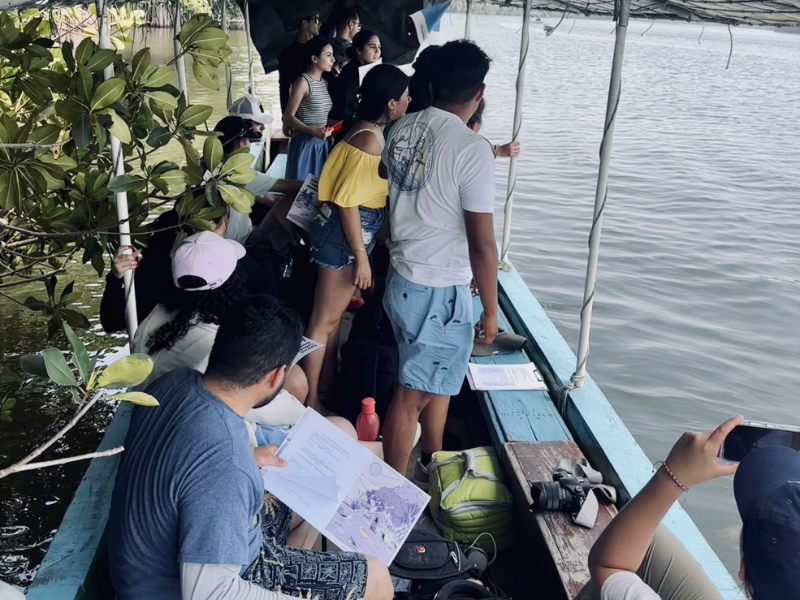
Fieldwork by Oceanography students of Rafael Landívar University. Photo courtesy of Víctor Mendoza
Inspiring Results: A Toolkit that Connects Production, Learning, and Conservation
Shrimp farm personnel strengthened their skills by implementation best practices. To date, 25 toolkits have been distributed among shrimp farms and strategic partners on the South Coast.
As part of the project, the Technical Working Group for the Conservation of Waterbirds and Shorebirds was also launched. Through this initiative, citizen science activities were promoted, and best practices were strengthened, demonstrating that shrimp production and biodiversity conservation can successfully coexist.
One of the project’s most significant outcomes was an unexpected opportunity: the toolkit was incorporated into an Oceanography course at Rafael Landívar University to train future environmental professionals through learning in the classroom, in estuaries, and on shrimp farms.
Fieldwork by Oceanography students of Rafael Landívar University. Photo courtesy of Víctor Mendoza
Lessons Learned to Strengthen a Culture of Conservation
The main lesson was confirmation that educational tools not only raise awareness in the production sector, but also transform the way workers, students, teachers, and communities learn to observe, record, and protect waterbirds and shorebirds.
The experience also showed that a single tool can build skills in different contexts, facilitating learning, promoting citizen science, and bringing conservation closer to both the production sector and academia.
What's Next: Opportunities to Multiply the Impact
The next step is to scale up this experience into a National Strategy for the Conservation of Guatemala’s Waterbirds and Shorebirds.
With additional funding, Fundación Defensores de la Naturaleza aims to document behavioral changes in companies, academic institutions, and communities; improve data collection in eBird and Merlin; and establish new hubs of learning, citizen science, and action for conservation.