In Guatemala, an andragogical toolkit on shorebirds and migratory birds is helping to train future professionals, from the classroom to the estuary and shrimp farms.
By Andrea Moreno. Fundación Defensores de la Naturaleza and Varinia Sagastume. Technical liaison. AvBio.
MSP+ Science to Action- 2025-2026
The challenge is not only to talk about shorebirds. It is to transform the way we understand shrimp farming companies, not merely as production sites, but also as shared landscapes where biodiversity can find food, rest, and refuge.
Shorebirds depend on coastal ecosystems that are increasingly under pressure from habitat loss, climate change, pollution, unsustainable production practices, and a mistaken perception: the belief that they pose a threat to production. Changing that perception takes more than data; it requires a different way of observing, discussing, and learning.
With that goal in mind, Fundación Defensores de la Naturaleza, as part of the project Science for Action funded by the MSP+ program, designed an andragogical toolkit to make scientific, visual, and practical information accessible to workers, technicians, and decision-makers in Guatemala’s shrimp farming industry.
But a well-designed toolkit can reach further than expected.
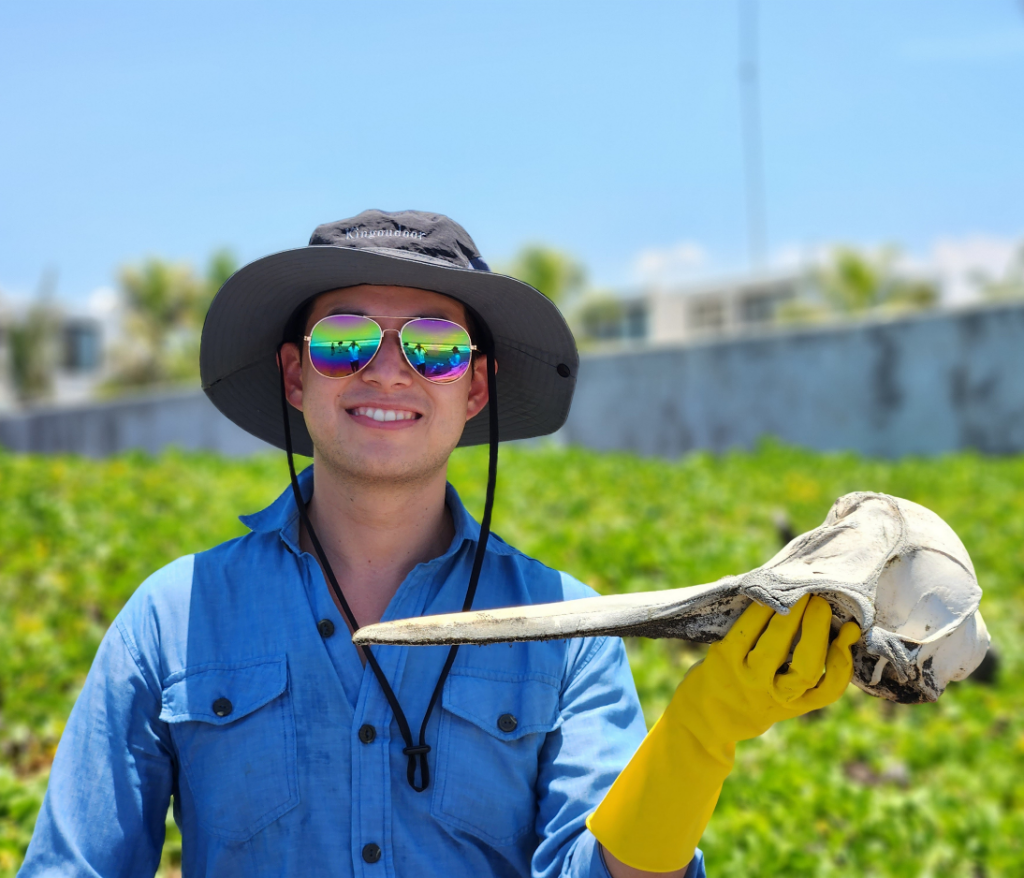
Víctor Mendoza is an environmental engineer and a professor at Rafael Landívar University. He is also a master’s student in Marine and Coastal Sciences at the Center for Marine Studies and Aquaculture of the Universidad de San Carlos de Guatemala. He was first introduced to the toolkit while completing his master’s, during a presentation by Varinia Sagastume, coordinator of the Foundation’s Science for Action program.
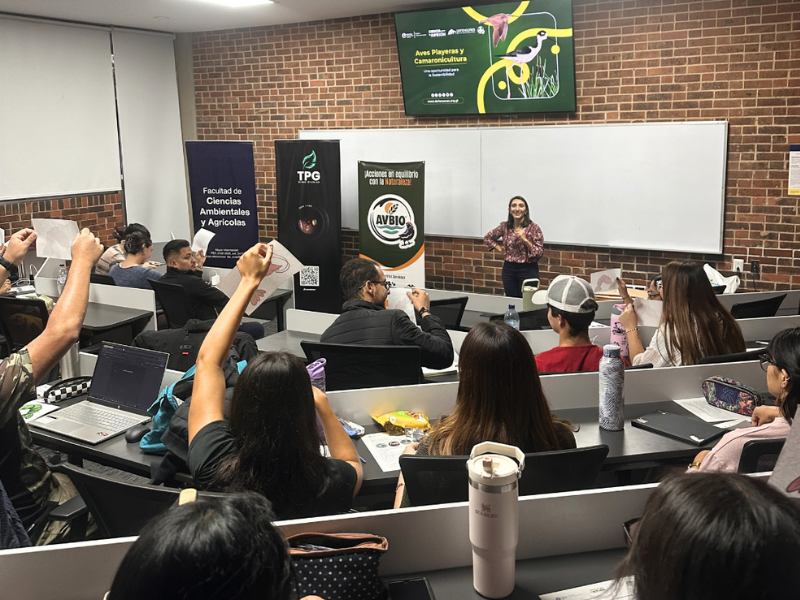
Each semester, in the Oceanography course at Rafael Landívar University, he works with around 33 third-year students. In class, he covers marine biology, marine-coastal ecosystems, environmental impacts, and biodiversity.
“The toolkit fit in naturally because it allows theory, practice, and the national context to be connected” Víctor notes.
That connection takes shape along the Guatemalan coast, its estuaries, its mangroves, its birds, and its shrimp farms. The videos help explain the context; the guides make it possible to identify species; the infographics organize complex ideas; and the data recording sheets turn observation into data.
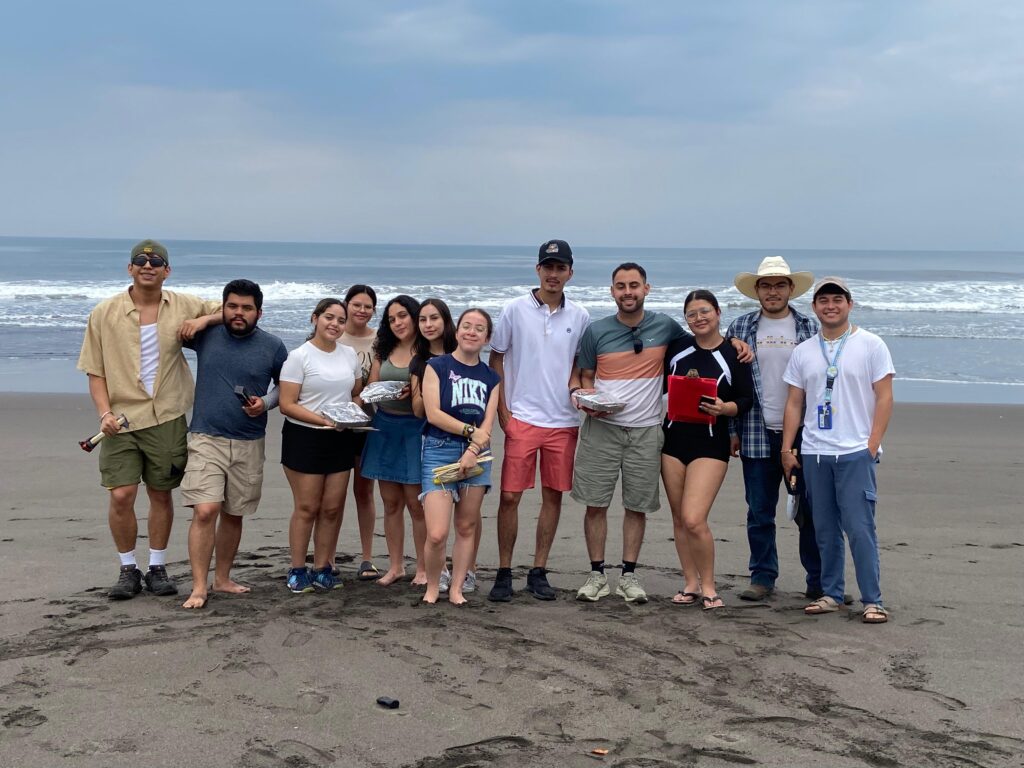
Amid long legs, curved bills, and muted plumage, the students began using the materials to watch birds along Guatemala’s South Coast. They split into groups, worked through the guides, compared silhouettes, logged their observations, asked questions, and learned by doing. Conservation, then, stopped being an explanation on a screen and became hands-on work in the field.
The change became visible on a second field visit. Víctor explains that the students could now recognize waterbirds and shorebirds. They could talk about nests, habitat, management practices, and conservation with greater confidence. They no longer saw a shrimp farm as merely productive infrastructure; they were beginning to see it as part of a living landscape.
That was the most rewarding moment for him: knowing that his students now understood what they were talking about. They had also grasped how shrimp farming companies can adopt good practices to avoid displacing shorebirds from the spaces they need to feed, rest, or breed.
That is the most significant change in this process: a toolkit created by a conservation organization to raise awareness in the shrimp farming sector was adopted by academia and began to shape professional perspectives. What started as a tool of the MSP+ program became a teaching resource for oceanography, biodiversity, citizen science, and coexistence between production and conservation.
Víctor’s experience at Rafael Landívar University points to a much broader possibility. When science is communicated with the intention of changing perceptions and habits, it can spark new questions, new conversations, and new ways of understanding coastal ecosystems in companies, in communities, and in university classrooms.
Conservation also means learning to read an entire landscape: the water, the mud, the pond walls of a shrimp farm, the nests, the migratory routes, and the human decisions that can protect or disrupt those cycles.